Saturday, June 24, 2023

Statement by Wm Harrison of his Rev. War Service

On May 15th of 1820 William Harrison appears before John McNairy, judge of the East & West Districts of Tennessee as part of his application for a military pension based on his service in the Revolutionary War.  After McNairy takes the statement and signs off on it he then sends it on to the Secretary of War, John C Calhoun.  These papers are included in the pension folder of Elvira Harrison(widow of William Harrison)

Image 386:  The "envelope" portion of the documents.
Image 387:  First page of statement by Wm Harrison to John McNairy
Image 388:  Last page of statement by Wm Harrison to John McNairy
Image 389:  Note to John C Calhoun from John McNairy with details
of enclosure from Wm's Capt. Macon and of where to send certificate.
These are just some of the details and the source list below contains information
on where to find the full file.  


Transcription Images 387 & 388

Image 387
District of West Tennessee
On the  15th of May 1820 before me the 
subscriber, a judge of the courts of the United 
States for the Districts of East & West Tennessee
Personally Appeared William Harrison
aged seventy years, resident in the county of
Bedford in the said District who being by
me first duly sworn, according to the law doth
on his oath make the following declaration
in order to obtain the provision made by
the law act of Congress entitled "An act
to provide for certain persons engaged
in the land & naval service of the 
United States in the revolutionary war"
that he the said William Harrison
was appointed and commissioned a
Lieutenant of Captain John Macon's com
pany of the continental army of the United
States during the revolutionary war in 
November 1776 of the North Carolina
continental line in the seventh Regt
commanded by Col. James Hogan
and that he faithfully served his
country until February 1778 at the
Valee(sic) Forge, when he was placed as
a supervisory officer subject to be called
into service when called on, that he was

Image 388
in the Battles of Brandywine and German-
Town, and that he is in reduced cir-
cumstances and stands in need of 
the assistance of his country for support
& that he has no other evidence now 
in his power that what now accompanies
this of his said services.  That he hath
long since lost his commission
sworn to and declared before 
me the day & year given
John McNairy  District Judge
Wm Harrison (signature)
I John McNairy judge do officially
certify that it appears to my satisfaction
that the said William Harrison did serve
in the revolutionary war as stated in the
preceding declaration against the common
enemy for the term of 9 months & was
at one time in the continental establishment
I am also satisfied that he needs the 
assistance of his country for support and
I now transmit the proceeding & testimony
taken & had before me to the secretary
for the department of War.  Witness my
hand the date above
John McNairy
District Judge


This is the back side of the papers which contain the statement
of Wm Harrison to John McNairy detailing Wm's service in the Rev. War 
as well as a note from McNairy to Calhoun and a statement from Capt Macon.
The papers were folded and the back addressed to the Sec. of War, John C
Calhoun.  Note the postmark:  Murfreesboro Tenn May 20 1820
[This was during the time period when Murfreesboro was the capital of TN(1819-1826)]

Source:  
"U.S., Revolutionary War Pension and Bounty-Land Warrant Application Files, 1800-1900," database with images, Ancestry(https://www.ancestry.com/discoveryui-content/view/26267:1995 : accessed 12 February 2023), H  > Harris, William - Hawley, James > Harrison, Sarah - Harsin, Garret > image 381-473 of 1112: citing NARA microfilm publication  M804, Records of the Department of Veterans Affairs, Record Group 15. National Archives, Washington, D.C.


Links of Interest: 
Wikipedia entry of John C Calhoun 
FindAGrave entry of John Macon
Wikipedia entry of James Hogun

Thursday, June 22, 2023

Checking in: A Few Thoughts on Various Genealogy Topics

I am thoroughly enjoying Legacy Family Tree Webinar's Best of ESM Series which is a perk of their webinar membership.  Each lecture is thought-provoking and motivational in so many ways it's hard to explain.  That said, I'm not going to try but I will recommend that you look into a webinar membership to have access to that series and many more wonderful webinars.  There are so many opportunities for education when it comes to genealogical research methodology and techniques--many of them free.  Just Google your interest.

I've also been revisiting some of the record books from my earlier research armed with my more recent discoveries. Names of previously unknown ancestors and family associates help to pull things together and provide a clearer picture of our family stories.

I also need to revisit the YDNA results of my Cook(e) line.  My brother tested for us and over the years I upgraded it to the BigY.  If only YDNA testing was as popular as autosomal testing.  The cost is what prohibits many from testing. Hopefully that will change and more folks will want to have representatives from their family lines test--especially some of the more common surnames doing that. This would be a good way to prove or disprove a lot of the older research where DNA testing was not available as evidence.  In the Cook(various spellings) YDNA project we most closely match descendants of Shem Cooke of Amelia VA and later of Granville Co NC.  Our group is Rlb and is broken down into further grouping however there is a group of testers who also claim descendance from that same Shem Cooke who are J2.  One of us is obviously wrong (or there is a split after Shem maybe?) but which one remains to be seen. 


Monday, May 15, 2023

US Veterans Administration Payment Cards

If your ancestor served in the US Army or Navy, while you are gathering service and pension records, don't forget to look for a US Veterans Administration Pension Payment Card(s) if he or his spouse(or dependants) were receiving a pension payment between the years 1907 and 1933. See the article at Fold3.com(in link below)to learn more about the information which is included on the card. While I've gotten several Union Civil War Pension files, I've not found these payment cards as part of the pension file though ordinarily, the information contained on them will be on a number of the documents within the Pension packet.  The card provides a nice running list of the rate of the pension as well as the main pension agency responsible for the area in which the pensioner lived.  The images below are snippets of the ones US Veteran's Administration Pension Payment Cards of Army Widow Tennessee Hill(Widow of Henry F Hill).


Sources:  

Fold3, (https://www.fold3.com/publication/964/us-veterans-administration-pension-payment-cards : accessed May 13, 2023), 

"United States Veterans Administration Pension Payment Cards, 1907-1933," database with images, FamilySearch (https://familysearch.org/ark:/61903/3:1:939K-X76D-M?cc=1832324&wc=M6RT-2NP%3A162330801 : 22 May 2014), Hill, Robert - Hill, Zubia L. > image 352 of 760; citing NARA microfilm publication M850 (Washington, D.C.: National Archives and Records Administration, n.d.).

"United States Veterans Administration Pension Payment Cards, 1907-1933," database with images, FamilySearch (https://familysearch.org/ark:/61903/3:1:939K-X7DX-F?cc=1832324&wc=M6RT-2NP%3A162330801 : 22 May 2014), Hill, Robert - Hill, Zubia L. > image 350 of 760; citing NARA microfilm publication M850 (Washington, D.C.: National Archives and Records Administration, n.d.).

https://www.archives.gov/files/research/military/army/dc/m850.pdf

Wednesday, April 26, 2023

19 Things You Can Do to Enhance Your Family Research


Well, it's official.  I've been blogging about people, places, and things I've found helpful in my research for 19 years.  Whew!  In celebration of the blogiversary, I've compiled a list of 19 ways to enhance your family research(listed in no particular order.)

  1. DNA Testing--Testing using autosomal and YDNA can bring about research avenues that you might not have ever discovered using only traditional genealogy research.  It can help to focus on our blood ancestors path while broadening our family.  Many times those cousins you discover thru DNA will have pictures, family memorabilia or stories about our ancestors that weren't passed down in our own line from the shared ancestor.  DNA testing mtDNA can also be helpful if you have a specific question about a matrilineal line.
  2. Read books about social situations--It was helpful for me to learn more about the Tuberculosis outbreak and hospitals when writing about my Cook(e) family.  My paternal grandfather's oldest sister's family was almost wiped out during the outbreak in Rutherford County Tennessee.  There are also many great books about slavery, women's history, and just about any other social situation you can imagine.
  3. Explore the Unindexed records at FamilySearch--These are a goldmine.  I have bookmarked the Place Catalog Search Results for areas I'm researching so that I can see what is available online at FamilySearch.   It makes it feel as if I am at the courthouse browsing thru through the record books.  The best part is, no travel, no need to worry about your attire, and no dust.
  4. Genealogy Education--There is so much out there in the way of education for genealogist.  Webinars, Seminars, Books and How To Videos.  Many of the libraries and genealogical societies offer free help.  I personally love Legacy FamilyTreeWebinars. ConferenceKeeper.org is also great for keeping up with all of the educational opportunities out there.
  5. Order Document retrieval--There are a good number of document retrieval services offerings.  When you think about how much it would cost to travel to a library and/or archives to get copies of the files you need, it's no wonder that there is a market for retrieval.  I've discovered so much wonderful information in pension files and copies of other records and often wish I had started taking advantage of these services sooner.
  6. Network--We really need to interact with other researchers who are studying the same areas or surnames.  They may have specialties that we don't. I've found it helpful to ask a friend about research problems to see if it is my approach that is limiting my results. 
  7. Talk to Family--Even siblings have different memories of events that happened in a family due to their own unique perspective.  Talk to cousins, aunts, uncles, grandparents, etc. They may have stories you don't and may have just assumed you knew the stories.  
  8. Cluster Research-- If you aren't researching the friends, associates, and neighbors of your ancestors, you are just getting a partial picture.  Their story is so much deeper than what you see if you merely scratch the surface.
  9. Visit areas where your ancestors lived.  If nothing else, it makes you feel closer to them.  It might also put you more "in tune" for researching the area.  For me it's a deep personal experience to walk on the same ground where my ancestors walked.
  10. Create a Family Archive of important documents--I have made several of these for my family.  I have one with the papers of my paternal grandparents and another starting at the marriage of my parents.  Often time you don't realize how much information you have until you start assembling the notebook/binder.
  11. Plan what becomes of your research--Not to be morbid, but if you don't want your research to end up at the landfill, you need to make plans for what happens to it once you have passed.  State Archives, local libraries or if you have historically significant items such as ledgers or family papers you might consider area museums. 
  12. Place Name or One Name Studies--This is a given really.  The more you know about an area in which your ancestor lived, the easier it is to know and understand what was going on in their life.  Also if you familiarize yourself with the different families who carry the same surname, you will be able to differentiate between your Cook family and the other Cook families.
  13. Organize Photos and Exchange--Organize your photos and try to identify the subjects and dates of each photo.  Many people do not like to share their photos of ancestors.  I share freely.  They have other descendants who might want copies.  Also if(heaven forbid) something should happen to your photo there will still be a digital version out there. That should be incentive enough to share right there.
  14. Use a Notebook(or notebooks) for Brainstorming--Always keep a notebook devoted exclusively to brainstorming on your research.  When you get an idea for an avenue of research, write it down otherwise you are likely to forget.  I keep a notebook on my nightstand.
  15. Revisit old Documents and Research periodically--This is especially helpful when you feel you are at a brick wall for a particular ancestors.  Many times what didn't look like helpful information when we first viewed the document is found to be helpful given what we know presently.
  16. Write about your research(blog or article submissions)--Writing or blogging is so helpful.  It helps you think thru research issues. Too writing about your ancestors gets your research out there.  This can be scary but it's also scary to have done years of research and no one is aware because it's never been put out there in a publication.  It doesn't matter whether it's a submission to a local or national genealogical publication or your own blog.  Please write.
  17. Join at least one Historical or Genealogical society--There are many types of historical and/or genealogical societies:  State, county, area, surname or association.   All of these serve a purpose you will just need to find one that suits your needs.  This can also help with networking and publishing.
  18. Email or Call County Clerks or Librarians with Specific Questions--Emailing or calling can save you time.  If you are planning on visiting the library or archives, you can be better prepared and increase the likelihood of a successful and productive research day(or week.)  Also, sometimes they can email you a document.  
  19. Mentor or be mentored--if you are an experienced researcher consider mentoring a new researcher. I began researching in 1990. I can't tell you the number of times I've wished I could tell my 1990 self DO THIS or DON'T DO THIS.  Regardless of whether you are mentoring or being mentored you will learn new things.
I hope you have found this list helpful and thanks for visiting! 

Monday, April 17, 2023

George Solifelt and wife in Columbus Ohio(Nov. 1902)

 I've been trying out a GenealogyBank subscription and found an additional mention of George H Solifelt in one of the newspapers images.  The paragraph about George contains an amazing amount of information considering it is only 3 sentences long. 

The Details

  • George H Solifelt(58) & wife(32) 
  • Passed thru Columbus Saturday(Nov 22nd or 29th)
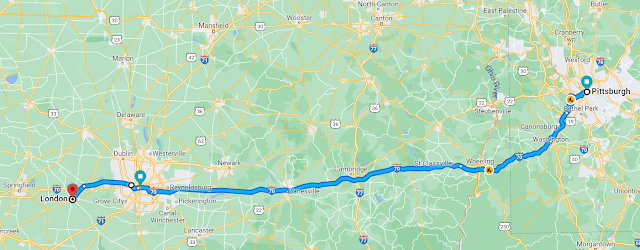
  • They were traveling from Pittsburgh to western KS
  • They claim to have friends in KS
  • They are entirely destitute & plan to take the trip on charity passes
  • County Infirmary directors gave them train tickets good as far as London OH

This wife would be Mary who is enumerated with him in the 1900 Census in Granville, Mifflin Co., Pennsylvania(E.D. 135 Sheet 3B). He sides steps the questions about a wife multiple times in his application for a pension and pension increases.  This is likely the one he married in TX and who was born in Mississippi.  His 1st wife, Kate divorced him by publication and her death which occurred about a year prior was covered in a number of newspapers.  Presumably George and Mary didn't make it out to Kansas.  They leave a paper trail in Fort Smith Arkansas and later he and Tennie after Henry F Hill's death do end up in KS.  There is evidence to suggest that Mary was still alive and in Ft Smith(AR) at least until 1926.  George and Tennie came to Iola, KS in April of 1909.

I need to make a timeline. 

Source:  

“Brevities,” Columbus(Ohio) Evening Dispatch, 29 Nov 1902, p. 7, col. 7; digital image, GenealogyBank.com (https://www.genealogybank.com/ : accessed 17 Apr 2023).


Trip from Pittsburgh to Columbus(OH) and on to London OH 
Note that this example is shown using present day roads.


Saturday, April 15, 2023

Mary Amanda Morton Newsom

Mrs. Mary Amanda Morton Newsom
Died:  Aug 6th 1953 1:25am
Age:  78
Services:  Rover Baptist church on Friday Aug 7th 1953
Burial:  Simpson Cemetery
Lawrence Funeral Home in charge of services
Parents:  Elijah & Mary Culverhouse Morton
Husband:  Jerry Newsom(d. 1935)
Member of Baptist Church
Lifelong Bedford Co. resident

Survivors
Daughters:  Mrs. Albert Hudson of Rover & Mrs. Tanner Farris of Rockvale
Sons:      Frank Newsom of Morrison
                    Roy Newsom of Nashville
            Howard Newsom of Christiana
            James P Newsom of Rover Community
18 Grandchildren
7 Great Grandchildren
One sister, Mrs. Anna Anthony of Lakeland Florida
Two Half-brothers:  Jacob Morton & Robert Morton of Rockvale


Source:
"Mrs. Mary Morton Newsom," Nashville Banner, 6 August 1953, p. 10, col 2; digital images, Newspapers.com(https://www.newspapers.com : accessed 15 April 2023).